
Noctave

Free sheet music · Noctave edition

The Blue Danube, Op. 314

Johann Strauss II 1825–1899

Advanced · 7/101867D major11 min 15 sThe Great Tunes
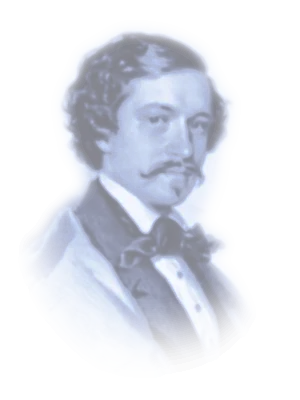
Portrait of Johann Strauss II, in moonlight

Listen

The first 21 seconds, played by the piano of Noctave, the same sound as in the app.

The piece

Johann Strauss the younger wrote The Blue Danube in 1866 for a Viennese men's choir, which first sang it on 15 February 1867. The welcome was polite; it was the orchestral version, played in Paris during the World's Fair that same year, that made it the most famous waltz in the world. It returns every year as an encore at the Vienna Philharmonic's New Year's Concert. The version played here is the one Strauss published for the piano with Spina in 1867, checked note by note against that edition.

The introduction opens with a shimmer in the right hand, two notes alternating very quickly, while the left hand calls like a horn. Then come five waltzes and an ending that recalls them. In each waltz, the left hand plays a bass note and then two chords: the bass on the first beat, the chords lighter. Count "one, two, three" and let the first beat carry the bar.

What makes it hard

Stamina
11 min 15 s of music, repeats included, to sustain without losing focus.
Ornaments
Written ornaments: 6 trills, 55 groups of grace notes, 4 mordents and 22 tremolos.
Octaves
426 octaves struck with one hand (306 in the right hand, 120 in the left).
Leaps
287 leaps of an octave or more in less than half a second, mostly in the left hand.

Measured on the score, repeats included, at the written tempo.

Play it in Noctave

The score is free here. In Noctave, its notes fall as light towards your keyboard, at your tempo, then fade little by little to leave you the score.

Get it on Google Play

More by II