
Noctave

Free sheet music · Noctave edition

Anitra's Dance (Peer Gynt, Op. 46 No. 3)

Edvard Grieg 1843–1907

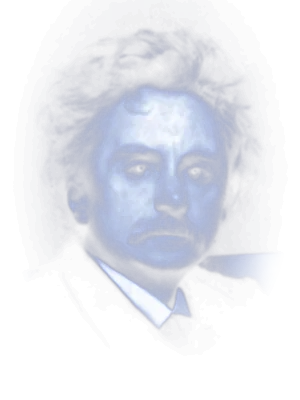
Portrait of Edvard Grieg, in moonlight

Listen

The first 41 seconds, played by Noctave’s robot pianist, who slows down at the end of each phrase. Tap “Listen” to hear the app’s piano.

At a glance

Intermediate · 6/103 min 16 sA minor3/4Both hands1875

The piece

Grieg wrote the incidental music for Henrik Ibsen's play Peer Gynt in 1875. In the fourth act Peer poses as a prophet and watches the Bedouin chief's daughter Anitra dance for him. In 1888 Grieg put the dance into his first orchestral suite, Op. 46, where only muted strings and a triangle play it. He made the piano version played here himself, after the Peters edition from Leipzig. It is a mazurka in A minor, light and a little teasing.

Most of the time the left hand plays a bass note and then two detached chords in every bar, as in a waltz, at ♩ = 160: keep it supple and not too loud. The right hand has ornaments to play without hurrying, two grace notes before the runs and short trills that the edition asks for without a closing turn. In the pianissimo passages both hands play together, an octave apart, a detached line that moves down by semitones. The second part is played twice, with its fp accents and, near the end, two voices in the right hand.


What makes it hard

Ornaments
Written ornaments: 28 trills and 30 groups of grace notes.
Leaps
122 leaps of an octave or more in less than half a second, mostly in the left hand.
Left hand
The left hand plays 57% of the notes, up to 4 a second.
Accidentals
17% of the notes carry an accidental outside the key signature: chromatic writing.

Measured on the score, repeats included, at the written tempo.

Play it in Noctave

The score is free here. In Noctave its notes fall as light towards your keyboard at your tempo, then fade little by little to leave you the score.

Download on the App StoreGet it on Google Play

More by Grieg

At the same level