
Noctave

Free sheet music · Noctave edition

Orpheus in the Underworld: Infernal Galop (the can-can)

Jacques Offenbach 1819–1880

Advanced · 7/101858D major2 min 13 sThe Great Tunes
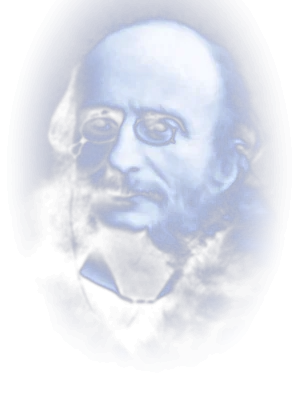
Portrait of Jacques Offenbach, in moonlight

Listen

The first 20 seconds, played by the piano of Noctave, the same sound as in the app.

The piece

In Orpheus in the Underworld, the comic opera Offenbach premiered in Paris in 1858, the gods of Olympus go down to the Underworld and end up dancing a wild galop. This Infernal Galop became the music of the “French can-can”, the high-kicking dance of the Paris music halls. The version played here is the one in the score for piano solo published by Heugel in 1862, entered note by note for Noctave: the introduction, the galop, the can-can tune and the ending in octaves.

Everything rests on the left hand: a bass note, then chords in eighths, steady as a dance that never stops. Keep those chords short and light, with a supple wrist. In the right hand, the staccato notes should bounce; the grace notes are played just before the beat, very quickly. Towards the end, the right hand moves up an octave, fortissimo: do not speed up, it is the steadiness that makes the effect.

What makes it hard

Chords
32% of the attacks are chords of three notes or more.
Octaves
341 octaves struck with one hand (213 in the right hand, 128 in the left).
Left hand
The left hand plays 61% of the notes, up to 4.3 a second.
Ornaments
Written ornaments: 26 groups of grace notes and 3 tremolos.

Measured on the score, repeats included, at the written tempo.

Play it in Noctave

The score is free here. In Noctave, its notes fall as light towards your keyboard, at your tempo, then fade little by little to leave you the score.

Get it on Google Play

More by Offenbach