
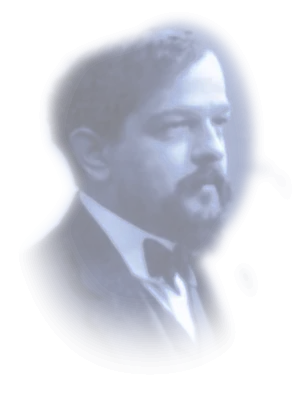
The piece
Debussy composed this waltz in 1890, long before his Préludes. Its first edition by Choudens in Paris lists it among his "Pièces pour piano", signed A. Cl. Debussy, alongside the Tarentelle styrienne and the Ballade slave. It is still a salon piece: a theme in A-flat major over a waltz accompaniment, livelier passages marked Moto, a Tempo rubato section, then a last part in F major that ends ff, molto marcato e ritenuto. This version follows that first edition.
The left hand carries the waltz: a bass note on the first beat, two chords on the second and third, and a leap in every bar. In the Moto passages, eighth-note triplets pass from one hand to the other from the treble down to the bass. Aim for one continuous line with no bump where the hands change. In the Tempo rubato section, the tune falls in eighth notes in the right hand above full chords: you can take your time there. Save some strength for the end, where the chords follow one another ff down to the last bass note.