
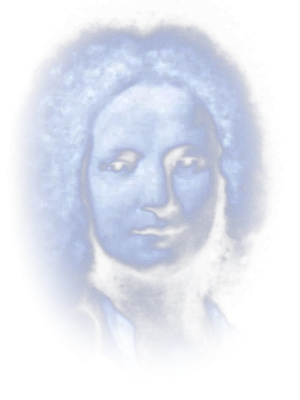
Born in Venice in 1678, Antonio Vivaldi was ordained a priest in 1703; his red hair earned him the nickname “the red priest”. That same year he became violin master at the Ospedale della Pietà, a Venetian home for orphaned girls with a famous orchestra, and he worked there on and off for more than thirty years. He wrote hundreds of concertos, among them The Four Seasons (published in 1725), sacred music and many operas. He died in Vienna in 1741.
His music was written for the violin and the orchestra, not for the keyboard. The catalogue presents two movements of The Four Seasons in easy versions written for Noctave, and his Folia, the last sonata of his first collection (1705): the theme in an easy version, then the theme and seven of its variations. Start with the Largo of Winter: the left hand alone first, holding the long notes of the bass, then the right-hand melody, slowly. The theme of the Folia, both hands in the same slow dance rhythm, and the opening of Spring, faster, with its loud then soft echoes, come next.