 Noctave
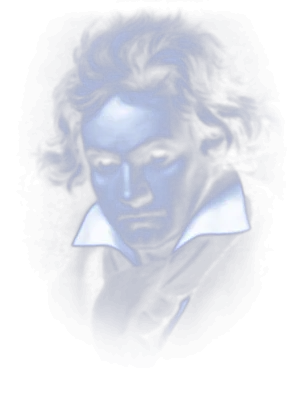
Born in Bonn, Beethoven moved to Vienna in 1792 and first made his name there as a pianist. He wrote thirty-two piano sonatas, five piano concertos, sets of variations and bagatelles, and went on composing as deafness drew him away from the concert stage. The “Moonlight” nickname of the Sonata Op. 27 No. 2 is not his: he called it Sonata quasi una fantasia.
Start with Ode to Joy, taken from the finale of the Ninth Symphony, then the easy version of the “Moonlight”, where the left hand carries the triplets on its own. The Sonata Op. 49 No. 2 comes next: its minuet asks for steady left-hand leaps and clean repeated notes. The original first movement of the “Moonlight” teaches you to sustain a melody above the triplets for more than five minutes, and Für Elise covers more than five octaves. Keep for last the Rondo a capriccio, published only in 1828, and the Presto agitato, where the left hand goes beyond ten notes per second.