 Noctave
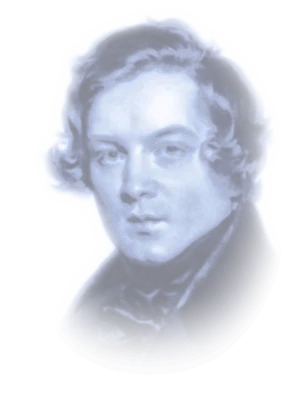
Born in Zwickau, Schumann began studying law in Leipzig before turning to music under the teacher Friedrich Wieck, whose daughter, the pianist Clara Wieck, he married in 1840. A problem with his hand ended his hopes of a pianist's career; he founded a music journal and wrote for the piano Carnaval, the Kinderszenen (Scenes from Childhood, Op. 15, 1838) and, in 1848, the Album for the Young, Op. 68, written for his children.
The Album for the Young works as a graded path. Melody lets the right hand sing over a left hand in broken chords, while Soldiers' March works on short chords in a dotted rhythm, before Humming Song. The Happy Farmer puts the tune in the left hand, beneath right-hand chords, and First Loss asks for an expressive line in E minor. Finish with the Scenes from Childhood: Of Foreign Lands and Peoples, a melody above triplets, then Träumerei, where each voice has to keep its own line.